Industry 5.0: How Human-Machine Collaboration Is Reshaping Factories Facts
Manufacturing is entering a new phase in which advanced technology and human expertise are increasingly designed to work together. Automation, artificial intelligence (AI), robotics, industrial Internet of Things (IIoT) systems, data analytics, and digital technologies have already changed how factories operate. Industry 5.0 builds on these developments while placing greater emphasis on people, sustainability, and resilience.
Industry 5.0 is not simply another stage of factory automation. The concept focuses on creating industrial systems where technology supports human capabilities instead of treating people as separate from automated processes. The European Commission describes Industry 5.0 around three major priorities: human-centricity, sustainability, and resilience.
This approach is becoming increasingly relevant as manufacturers look for ways to improve production flexibility while maintaining worker wellbeing, responsible resource use, and operational adaptability.
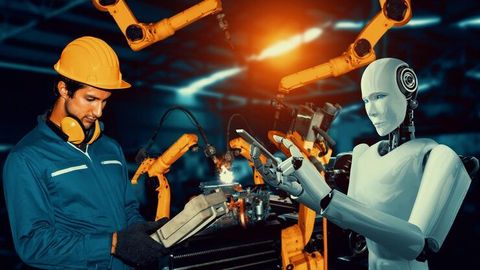
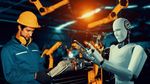
Human-machine collaboration is at the center of this transformation. Instead of asking whether machines can perform tasks independently, Industry 5.0 asks how people and machines can combine their different strengths to create more adaptable manufacturing environments.
What Is Industry 5.0?
Industry 5.0 is a manufacturing vision that combines advanced industrial technologies with human expertise and broader social and environmental objectives.
Industry 4.0 primarily emphasized connected machines, automation, data exchange, smart factories, and digital transformation. Industry 5.0 extends this thinking by giving greater importance to the human role within technologically advanced production environments.
The European Commission specifically notes that Industry 5.0 should not be understood simply as a chronological replacement for Industry 4.0. Instead, it complements existing digital manufacturing approaches by emphasizing human-centric, sustainable, and resilient industrial systems.
The three central principles are:
- Human-centricity: Designing technology around worker wellbeing, skills, participation, and empowerment.
- Sustainability: Using resources responsibly and supporting more environmentally conscious production.
- Resilience: Helping industrial systems adapt to disruptions, changing demand, supply challenges, and other uncertainties.
This means a highly automated factory is not automatically an Industry 5.0 factory. The way technology affects people, resources, and long-term operational resilience is equally important.
Human-Machine Collaboration in Modern Factories
Human-machine collaboration describes manufacturing environments where workers and intelligent machines perform complementary tasks.
Machines are generally well suited to repetitive operations, precise movements, continuous monitoring, data processing, and activities that may expose people to difficult working conditions. Humans, meanwhile, contribute contextual understanding, creativity, judgment, problem-solving, communication, and the ability to respond to unexpected situations.
Industry 5.0 seeks to combine these capabilities.
For example, a collaborative robot, commonly called a cobot, can assist a worker with material handling or repetitive assembly activities. The worker can concentrate on tasks requiring inspection, decision-making, or fine adjustments while the robotic system handles predictable movements.
European research initiatives have explored collaborative robotics, artificial intelligence, augmented and extended reality, and human-centered manufacturing systems as ways to support closer cooperation between people and machines.
The objective is not necessarily to remove human involvement. Instead, technology can be designed to extend human capabilities.
Technologies Supporting Industry 5.0
Several technologies contribute to the development of Industry 5.0 manufacturing environments.
Collaborative robots
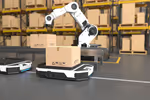
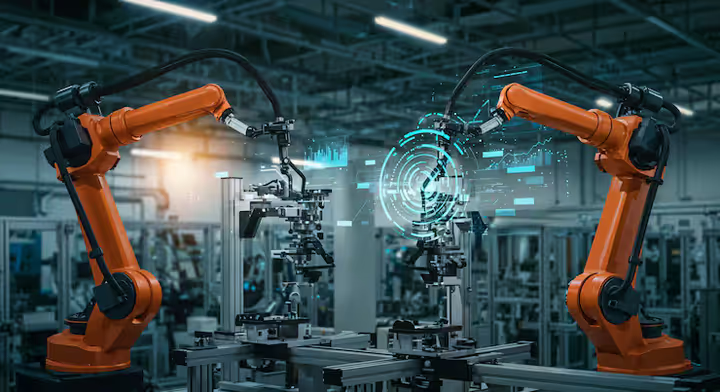
Collaborative robots are designed to work alongside people in appropriate industrial settings. They can support assembly, material handling, inspection, and other structured activities.
Their role can be particularly useful when production requires both machine precision and human adaptability.
Artificial intelligence
AI can analyze large volumes of production data and identify patterns that may be difficult to recognize manually. It can support quality monitoring, predictive maintenance, process optimization, and production planning.
Human oversight remains important because AI systems depend on the quality of their data, system design, operating conditions, and appropriate interpretation.
Industrial Internet of Things
IIoT technology connects machines, sensors, production equipment, and software systems. These connections allow factories to collect information about equipment conditions, production processes, energy consumption, and operational performance.
The resulting data can help workers and managers understand what is happening across production environments.
Digital twins
Digital twins create digital representations of physical equipment, processes, or systems. Manufacturers can use these models to examine potential process changes and analyze system behavior without immediately changing the physical production environment.
Extended reality
Augmented reality and other extended reality technologies can support training, assembly guidance, equipment maintenance, and remote assistance. Research projects such as XR5.0 are exploring AI-enabled immersive technologies designed around individual worker requirements.
Cloud and edge computing
Cloud platforms can provide centralized data processing and collaboration, while edge computing can process selected information closer to machines and sensors. Together, these technologies can support responsive industrial applications.
How Industry 5.0 Differs From Industry 4.0
Industry 4.0 remains an important foundation for modern manufacturing. Its focus on connected systems, automation, data, and digital technologies provides many of the capabilities used in Industry 5.0.
The difference is primarily in emphasis.
| Area | Industry 4.0 | Industry 5.0 |
|---|---|---|
| Main focus | Digital transformation | Human-centered industrial transformation |
| Automation | High | Collaborative and purposeful |
| Human role | Operator of digital systems | Active collaborator and decision-maker |
| Robotics | Automated production | Human-robot collaboration |
| Data | Connectivity and analytics | Analytics supporting people and processes |
| Sustainability | Increasingly important | Central strategic principle |
| Resilience | Operational efficiency | Adaptability and continuity |
| Worker skills | Digital skills | Digital, technical, creative, and problem-solving skills |
| Production | Smart and connected | Smart, connected, human-centered |
| Long-term objective | Digital industrial efficiency | Human-centered, sustainable, resilient industry |
Industry 5.0 therefore does not require manufacturers to abandon Industry 4.0 technologies. Instead, it provides a broader framework for determining how those technologies can serve people, environmental objectives, and resilient industrial systems.
Benefits of Human-Machine Collaboration
Human-machine collaboration can influence several areas of manufacturing.
Improved task allocation
Machines can handle predictable and repetitive activities while workers focus on tasks involving judgment, creativity, supervision, and problem-solving.
This can create a more balanced division of responsibilities.
Greater production flexibility
Traditional automated systems may be optimized for highly standardized processes. Human-machine collaboration can make it easier to accommodate variations when systems are appropriately designed.
This is especially relevant to manufacturing environments where product specifications or production requirements change frequently.
Better workplace ergonomics
Machines can assist with physically demanding activities such as repetitive handling or positioning. Properly designed systems may reduce unnecessary physical strain.
However, automation does not automatically guarantee a better workplace. Ergonomics, safety procedures, equipment design, and worker participation remain important.
Enhanced decision support
AI and industrial analytics can provide workers with additional information about equipment, production conditions, and potential issues.
Instead of relying only on manual observations, workers can combine their experience with machine-generated information.
Support for worker development
Industry 5.0 can increase demand for skills related to robotics, data interpretation, digital systems, equipment supervision, process analysis, and human-machine interaction.
The European Commission identifies upskilling and reskilling as important elements of the transition toward human-centered industry.
Sustainability and Resource Efficiency
Sustainability is another major component of Industry 5.0.
Modern manufacturing can involve significant energy use, raw materials, transportation, equipment, and waste streams. Digital technologies can provide more detailed information about how resources are being used.
For example, connected sensors can monitor equipment conditions and energy consumption. Analytics can then help organizations identify inefficient processes or unusual operating patterns.
Industry 5.0 also encourages consideration of product lifecycles and circular approaches. This can involve designing processes that support resource efficiency, reuse, repair, recycling, and responsible material management.
The European Commission identifies sustainability alongside human-centricity and resilience as one of the three core principles of Industry 5.0.
Technology alone, however, does not guarantee environmental improvement. Manufacturing organizations need appropriate measurement methods, responsible process design, and long-term sustainability planning.
Resilience in Manufacturing
Manufacturing systems operate within complex supply chains. Disruptions can arise from changing demand, component shortages, transportation challenges, equipment failures, cybersecurity incidents, or other unexpected events.
Industry 5.0 places resilience alongside sustainability and human-centricity because modern factories need to adapt rather than depend entirely on fixed production assumptions.
Connected systems can provide greater visibility into production conditions. Digital models can help organizations examine alternative scenarios. Flexible machinery can support changes in production requirements, while skilled workers can respond to situations that automated systems may not anticipate.
A resilient factory therefore combines technological capability with human decision-making and organizational preparedness.
Challenges of Industry 5.0 Adoption
Although Industry 5.0 presents significant opportunities, its implementation can be complex.
Workforce training
Employees may need training in robotics, AI-supported systems, data interpretation, digital interfaces, and new production procedures.
Training should be continuous rather than limited to the initial technology deployment.
System integration
Factories often contain equipment from different generations and manufacturers. Connecting legacy systems with modern digital platforms can require careful planning.
Data security
Connected industrial environments generate and exchange significant amounts of operational information. Appropriate cybersecurity practices are therefore important for protecting systems and maintaining reliable operations.
Human-machine safety
Collaborative technologies require appropriate risk assessment, physical safeguards, software controls, training, and operating procedures. Safety should be considered during system design rather than added after implementation.
Organizational change
Industry 5.0 can affect workflows, responsibilities, training programs, maintenance procedures, and decision-making structures. Successful implementation therefore requires organizational planning as well as technological investment.
Practical Steps Toward Industry 5.0
Organizations interested in Industry 5.0 can begin with a structured approach.
First, identify production activities where human-machine collaboration could provide meaningful improvements. Not every process requires advanced automation.
Second, evaluate existing equipment, data systems, workforce skills, safety requirements, and production objectives.
Third, select technologies according to specific operational needs rather than adopting technology simply because it is new.
Fourth, involve workers during system design and testing. Employees who understand production processes can provide valuable information about practical requirements and potential risks.
Fifth, introduce training alongside technology deployment.
Finally, measure results using a balanced set of indicators. Productivity can remain important, but organizations can also evaluate worker experience, quality, resource utilization, system resilience, safety, and adaptability.
Which Industries Can Use Industry 5.0?
Industry 5.0 principles can apply across many manufacturing environments.
Automotive manufacturing: Human-robot collaboration can support assembly, inspection, and flexible production.
Electronics: Precision equipment combined with human quality assessment can support complex manufacturing processes.
Pharmaceutical manufacturing: Digital monitoring and automated systems can complement specialized human oversight.
Food processing: Connected sensors, robotics, and analytics can support quality and process monitoring.
Aerospace manufacturing: Advanced digital systems can assist with precision manufacturing while experienced professionals handle complex decisions.
Industrial equipment: Flexible automation can support varied production requirements while technicians maintain oversight of machinery and processes.
The specific technologies and methods will vary according to production requirements, safety considerations, regulatory frameworks, workforce skills, and organizational objectives.
Future Outlook for Industry 5.0
Industry 5.0 is likely to remain closely connected with developments in AI, robotics, industrial data platforms, digital twins, extended reality, advanced sensors, and intelligent automation.
One important direction is the development of systems that can understand industrial environments more effectively and provide workers with useful information at the right time.
Another direction involves more personalized manufacturing and production systems that can respond to changing requirements without sacrificing operational reliability.
The European Commission continues to support Industry 5.0 through research, innovation programs, skills initiatives, and work focused on human-centric manufacturing. Its current Industry 5.0 framework continues to emphasize sustainability, resilience, and human-centered industrial transformation.
The long-term development of Industry 5.0 will therefore depend not only on technological progress but also on workforce participation, responsible implementation, cybersecurity, training, sustainability measurement, and effective organizational planning.
Tools and Resources for Understanding Industry 5.0
Several types of resources can help organizations and learners explore Industry 5.0:
- Industrial IoT platforms — For understanding connected equipment and industrial data.
- Digital twin software — For modeling equipment and production processes.
- Robotics simulation tools — For studying robot workflows before physical deployment.
- AI analytics platforms — For analyzing manufacturing and operational data.
- Extended reality systems — For exploring immersive training and maintenance applications.
- Manufacturing execution systems — For coordinating production information and workflows.
- Workforce training platforms — For developing digital and technical manufacturing skills.
These resources should be evaluated according to the organization’s technical environment, workforce requirements, security considerations, and operational objectives.
Frequently Asked Questions
What is Industry 5.0?
Industry 5.0 is a human-centered approach to industrial transformation that combines advanced technologies with human expertise. It emphasizes three major principles: human-centricity, sustainability, and resilience. Rather than focusing only on automation and productivity, it considers how technology can support workers while helping manufacturing systems become more adaptable and environmentally responsible.
How does Industry 5.0 use robots?
Industry 5.0 can use collaborative robots, or cobots, to work alongside human operators in suitable manufacturing environments. Robots can perform repetitive or highly structured activities while people contribute judgment, creativity, supervision, and problem-solving. The exact arrangement depends on production requirements, safety assessments, equipment capabilities, and worker training.
Does Industry 5.0 replace human workers?
Industry 5.0 is designed around human-machine collaboration rather than treating automation as a simple replacement strategy. Its human-centric approach emphasizes worker skills, wellbeing, participation, and empowerment. Machines can perform certain repetitive or data-intensive activities, while humans continue to contribute experience, judgment, creativity, and decision-making.
What technologies are important for Industry 5.0?
Important technologies include collaborative robotics, artificial intelligence, industrial IoT, sensors, data analytics, cloud and edge computing, digital twins, and extended reality. These technologies can provide connectivity, automation, analysis, and decision support. Their value depends on how effectively they are integrated into human-centered production processes.
Why is sustainability important in Industry 5.0?
Sustainability is one of the three central principles of Industry 5.0. The approach encourages manufacturers to consider resource use, energy consumption, product lifecycles, circular practices, and environmental impacts alongside operational objectives. Technology can provide useful information for these activities, but meaningful sustainability improvements require appropriate processes, measurement, and organizational commitment.
Conclusion
Industry 5.0 represents a broader way of thinking about the future of manufacturing. Instead of viewing automation, artificial intelligence, robotics, and human expertise as competing forces, it focuses on how they can work together.
The concept places people at the center of technologically advanced production while also emphasizing sustainability and resilience. Human-machine collaboration can allow machines to handle repetitive and data-intensive activities while workers contribute judgment, creativity, experience, and problem-solving.
The transition will not happen through technology alone. Training, workplace design, cybersecurity, safety, system integration, worker participation, and responsible planning are equally important.
As manufacturing systems become increasingly connected and intelligent, Industry 5.0 provides a framework for considering not only what factories can automate, but also how technology can support people and create more adaptable, responsible, and resilient industrial environments.